
2026 NWSA/SCYA Conference offerings

Check schedule below for details on each selection.
Choose an exciting track for a great conference experience, or build you own schdule when you choose a la carte.
Participants may select only one on the water class during the conference.
Tracks
Take the Helm® Track* • Debby Grimm, Capt. Kim Walther and Capt. Wendy Sarnoff
CHOOSE FULL day: Saturday • 9:00am - 11:45am • classroom, dockside + 1:30pm - 4:15 on the water (Choose your classes for Sunday)
OR CHOOSE 1/2 days: Saturday • 9:00am - 11:45am • classroom, dockside + Sunday • 9:00am - 11:45am • on the water (Choose afternoon classes for Saturday and Sunday)
Best for novice! This track designed for adult women wanting to learn to sail offers a great start. In the classroom, you will learn parts of the boat and what they do, the difference between tacking and gybing, and cover essential safety practices. At the dock, you will learn the details for how to raise and lower sails, how to use the sails to make the boat go towards your goal, and much more. Then, you can take your newfound knowledge on the water to learn the steps for tacking/gybing.
Take the Helm on-the-water sessions will give novice sailors a chance to adjust sails, steer the boat, and put to practice the language and things learned on land.
* Add land-based sessions on Sunday to complete the Take the Helm track to earn a certificate of completion for the NWSA-introduction course.
Advancing Leadership in Racing Track* — Transpac winner, Alli Bell
Saturday • 9:00am - 4:15pm • classroom
Using a combination of talking, stories, activities, workshops, interaction, and most importantly—fun! We will cover: Leadership - what does it mean, what might it look like, why is it important to understand; Building and leading a team - how to select members, what are the roles, developing trust, team management; Decision making - how are decisions made; Communication - Risk management; Practical leadership - putting all the above into real situations, how might the context affect the way the team behaves.
*Earn a SCYA Certificate of Completion.
Advanced Sail Trim Track + mini regatta* — Transpac winner, Alli Bell
Sunday • 9am - 4:15pm • dockside, on the water, J/22s
The all-morning Advanced Sail Trim segment is designed to improve performance, control and speed by learning more about adjustments to increase your boat speed toward the marks and finish line. Learn to set the mainsail and headsail to work together. Adjust draft and twist with the right control line for conditions you face. Tune fairleads for a perfect slot. Choose traveler or mainsheet adjustment with purpose. Set optimal cunningham, outhaul, vang. Manage halyard and backstay. And fly a well-managed spinnaker. Sail faster. Point higher. Enjoy a quieter helm. Go fast! Then put your newly honed skills to a test in a mini regatta.
*Earn a SCYA Certificate of Completion.
Race Committee Track* • PRO Wendy Corzine
Saturday • 9:00am - 11:45am • classroom, dockside
This track fills the entire morning on Saturday. Add Saturday afternoon choices.
Sunday • 9:00am - 10:15am • classroom, dockside (Add a 10:30-11:45 class option: Heavy Weather, Throw a Line or Crew Overboard.)
Sunday • 1:30pm - 4:15pm • dockside as mini regatta race committee
Good for any level! This track provides an on-ramp to those interested in being on a race committee and learning more about the opportunities of becoming a Certified Principal Race Officer. Sessions will include a general overview of the Race Committee, roles, rules, sequences, and dockside practice. Dockside practice first. Sunday afternoon the learning will get real. You will serve in the many roles learned to manage the racing action as advanced sailors test their skills. It will be exciting and fun to serve as part of the Race Committee for this mini-regatta.
*Earn a SCYA Certificate of Completion.
Build your own Cruising Track
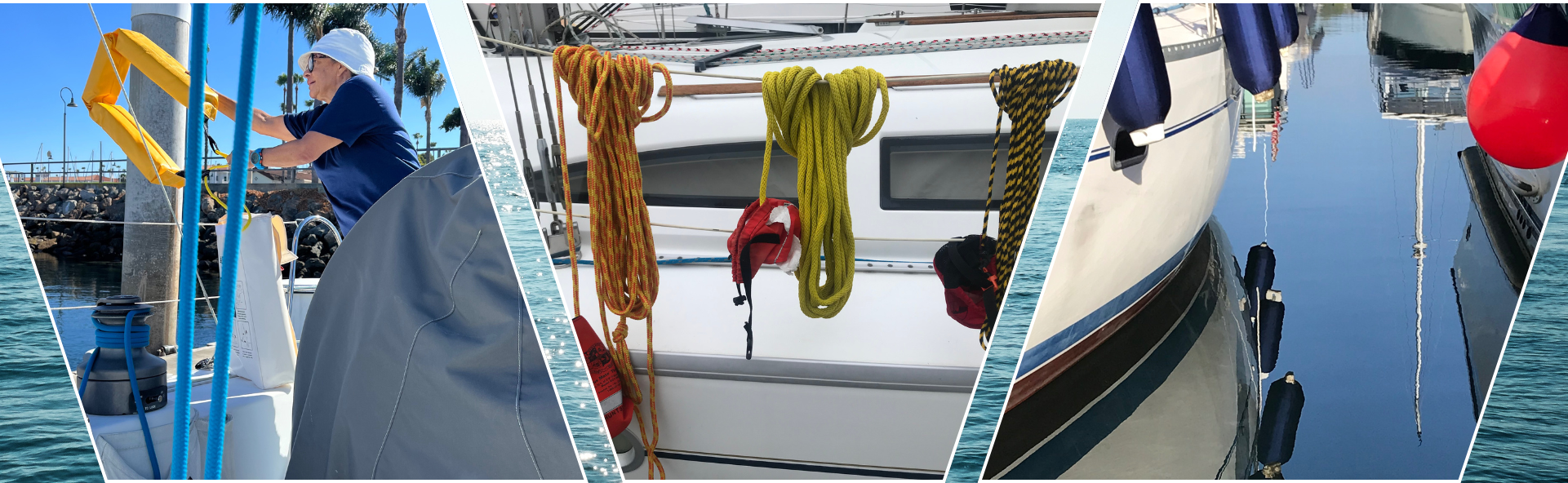
Docking, Anchoring or Dinghy Driving are good on the water options each a half-day – choose one.
Try this agenda with a mix of safety and skills or choose a la carte from the purple classes.
Saturday:
Crew Overboard + Electrical Systems + Intro to Navionics + Flooding Control
Sunday:
Avoiding Mishaps + Throw a Line + Heavy Weather + First Aid
Only one on the water class per person.
Saturday morning 1/2 day - on the water
Only one on the water class per person. Do not sign up for another Saturday morning class.
Saturday morning 1st session - land based
Boat Systems • Capt. Holly Scott
Saturday • 9:00am - 10:15am • classroom
Good for any level! Topics may cover an overview and location of: Fuel system - tank venting, fuel to filters, when to change filters, when to clean tank, treat fuel, etc. Water system - air loop requirements, gravity systems, pumps and their positions in system, cleaning pumps, pump placement; Electrical system - importance of ABYC standards and proper wire length and diameter, checking for corrosion, heat venting, grounding, neatness and avoid abrasion, inverters role and safety, electrical leakage check, battery check and maintenance and protection, etc.; Plumbing systems - head basics, valves, best routes to holding tank, emptying tank and flushing, mention variety of systems (macerator, chemical treatments, composting), avoiding smell. How to inspect each system and troubleshoot.
Crew Overboard: prevention and rescue • Capt. Margaret Pommert and Capt. Debbie Huntsman
Saturday • 9:00am - 10:15am • meet dockside
Good for any level! Form a foundation of knowledge and skills for avoiding and responding to an overboard situation, including making a Mayday call. Learn principles behind crew-overboard rescue, including prevention strategies by avoiding common causes. Learn the immediate steps to take when a crew member goes overboard, including how to remain calm and communicate effectively. Gain hands-on experience using a Lifesling, throw bag, and lifting tackle for retrieval. Explore situational awareness and crew coordination for picking up a person in the water and coordination with authorities during a response. Learn what to do if you are the person in the water. Part of the learning — participants must wear USCG or SOLAS-approved lifejacket on the dock and on the boat.
Saturday morning 2nd session - land based
Electrical System and Batteries • Capt. Holly Scott
Saturday • 10:30am - 11:45am • outside
Good for any level! The Power is Yours: How to set up and maintain your own electrical system on your boat. Beginner and intermediate boaters. Probably realistically up to 30 people since I plan to have small group activities. Takeaways: how to set up charging mechanisms for a house and starter battery, how to choose the appropriate type and size battery for your needs, how to physically put terminals on all types of wires, how to check systems with electronic devices to measure volts and resistance, what common issues arise with electrical systems that you can diagnose and fix yourself.
Flooding Control: hands-on damage management • Capt. Margaret Pommert and Capt. Debbie Huntsman
Saturday • 10:30am - 11:45am • outside
Good for any level! Students will have realistic flooding training without the stress and danger of being on a boat with water pouring in. The flooding control wet trainer allows your instructors to provide realistic boat and life emergency scenarios that need a solution fast. Learn as individuals and as a team to prevent flooding, prepare for it, find and evaluate dangers, then act in a safe manner to keep the boat from sinking, or creatively use tools and items you have on hand to buy time until help arrives. Examples include mitigating compromises in pipes, valves, hoses, hull breach, prop shaft damage, and more. It is likely you will get wet in the class. Suggested foul weather gear or fast-drying clothes. Shoes are required.
Saturday afternoon 1/2 day - on the water
Only one on the water class per person. Do not sign up for another Saturday afternoon class.
Saturday afternoon 1st session - land based
Good for any level! Ready to get a little knotty? Join this lively, laugh-filled workshop where we turn limp lines into easy, memorable must-knows. You'll master the classics: clove hitch, figure-8, cleat hitch, bowline, square knot and more, using fun tricks that make each knot stick in your mind (not your fingers!). Whether you're brand-new to the deck or a seasoned sailor, you'll leave with knot-tying superpowers and a smile. Let's tie, tug, twist and totally rock these ropes.

Flooding Control: hands-on damage management • Capt. Margaret Pommert and Capt. Debbie Huntsman
Saturday • 1:30pm - 2:45pm • outside
Good for any level! Students will have realistic flooding training without the stress and danger of being on a boat with water pouring in. The flooding control wet trainer allows your instructors to provide realistic boat and life emergency scenarios that need a solution fast. Learn as individuals and as a team to prevent flooding, prepare for it, find and evaluate dangers, then act in a safe manner to keep the boat from sinking, or creatively use tools and items you have on hand to buy time until help arrives. Examples include mitigating compromises in pipes, valves, hoses, hull breach, prop shaft damage, and more. It is likely you will get wet in the class. Suggested foul weather gear or fast-drying clothes. Shoes are required.
Electrical System and Batteries • Capt. Holly Scott
Saturday • 1:30pm - 2:45pm • outside
Good for any level! The Power is Yours: How to set up and maintain your own electrical system on your boat. Beginner and intermediate boaters. Probably realistically up to 30 people since I plan to have small group activities. Takeaways: how to set up charging mechanisms for a house and starter battery, how to choose the appropriate type and size battery for your needs, how to physically put terminals on all types of wires, how to check systems with electronic devices to measure volts and resistance, what common issues arise with electrical systems that you can diagnose and fix yourself.
Saturday afternoon 2nd session - land based
Saturday • 3:00pm - 4:15pm • classroom
Good for any level! Be prepared for a medical emergency by stocking your first aid kit well and knowing how to use it for crew aboard your boat or others. This course will cover typical medical issues that one can find both offshore and near shore and how to think about what to do when they occur. Review guidelines for when to call for help and if an injured person should be treated on board or returned to land as quickly as possible. Learn how to communicate with your crew, other boats, and first responders.
Heavy Weather: lighten the load • Capt. Karen Prioleau
Saturday • 3:00pm - 4:15pm • classroom
Good for any level! Learn the early warning signs and some basic weather tracking tools. Tactics aren't just for the boat; you'll need to prepare your crew, your boat, and yourself. Basic tactics and more advanced storm tactics will be covered to help you ride to safety.
Boat Systems • Capt. Holly Scott
Saturday • 3:00pm - 4:15pm • classroom
Good for any level! Topics may cover an overview and location of: Fuel system - tank venting, fuel to filters, when to change filters, when to clean tank, treat fuel, etc. Water system - air loop requirements, gravity systems, pumps and their positions in system, cleaning pumps, pump placement; Electrical system - importance of ABYC standards and proper wire length and diameter, checking for corrosion, heat venting, grounding, neatness and avoid abrasion, inverters role and safety, electrical leakage check, battery check and maintenance and protection, etc.; Plumbing systems - head basics, valves, best routes to holding tank, emptying tank and flushing, mention variety of systems (macerator, chemical treatments, composting), avoiding smell. How to inspect each system and troubleshoot.
Saturday • 3:00pm - 4:15pm • outside
Good for any level! Students will have realistic flooding training without the stress and danger of being on a boat with water pouring in. The flooding control wet trainer allows your instructors to provide realistic boat and life emergency scenarios that need a solution fast. Learn as individuals and as a team to prevent flooding, prepare for it, find and evaluate dangers, then act in a safe manner to keep the boat from sinking, or creatively use tools and items you have on hand to buy time until help arrives. Examples include mitigating compromises in pipes, valves, hoses, hull breach, prop shaft damage, and more. It is likely you will get wet in the class. Suggested foul weather gear or fast-drying clothes. Shoes are required.
 Sunday morning 1/2 day sessions - land based
Diesel Engine Maintenance • Holly Scott
Sunday • 9:00am - 11:45am • outdoor
If you take this class, do not sign up for another morning class. You will be in this class all morning.
Good for any level. Learn the basics about your marine diesel engine: maintenance, components, and what they do, basic troubleshooting, and when to call a mechanic. This is a hands-on learning experience.
Sunday morning 1st sessions - land based
Advanced Navionics: beyond the route • Capt. Maureen Vild
Sunday • 9:00am - 10:15am • classroom
Good for intermediate - advanced. This advanced electronic session builds on foundational navigation skills and takes participants deeper into the power of digital charting tools. After a brief review of core concepts, we?ll refine route planning, explore how to query chart information along a chosen course, and learn to identify aids to navigation (buoys) by their characteristics, including light patterns. The emphasis shifts from simply creating a route to understanding the details that make it safe, efficient, and executable in real conditions. Prerequisite: Familiar with how to use an iPad or other tablet device and download the Navionics app.
Sunday • 9:00am-10:15am • outdoor
Good for any level. Ready to get a little knotty? Join this lively, laugh-filled workshop where we turn limp rope into easy, memorable must-know knotss. You'll master the classics: clove hitch, figure-8, cleat hitch, bowline, square knot and more, using fun tricks that make each knot stick in your mind (not your fingers!). Whether you're brand-new to the deck or a seasoned sailor, you'll leave with knot-tying superpowers and a smile. Let's tie, tug, twist and totally rock these ropes.
Avoiding Mishaps and Mayhem • Capt. Debbie Huntsman
Sunday • 9:00am-10:15am • meet dockside
Good for any level. Sailing is generally a safe sport. Yet S*** happens when we are on the water, facing the elements head-on. We’ll take a look back at our past mistakes that didn’t just end in a mishap, and figure out what led to the mayhem. The goal is to get ready to minimize or even avoid known dangers, so we can keep sailing fun and enjoyable, even when things don’t go as planned. This workshop is focused on accident prevention and development of a safety ethos. Learn hands-on methods to: stay on the boat, use line handling skills for safe docking. Practice using a fire blanket and extinguisher, learn how to receive and how to make a Mayday call and more.
Sunday morning 2nd session - land based
Heavy Weather: lighten the load • Capt. Karen Prioleau
Sunday • 10:30am - noon • classroom
Good for any level! Learn the early warning signs and some basic weather tracking tools. Tactics aren't just for the boat; you'll need to prepare your crew, your boat, and yourself. Basic tactics and more advanced storm tactics will be covered to help you ride to safety.
Throw a Line: tie needed knots • Suzy Curry
Sunday • 10:30am - noon • outdoor
Good for any level! Learn how to throw a line like an awesome woman, with purpose and precision! This hands-on session teaches you how to properly prepare, grip, and throw a heaving line with confidence, plus how to tie two of the most important knots every sailor should know: the sheet bend for combining lines and the bowline for creating a secure, life-saving loop around your waist. Expect practical skills, real-world scenarios, and plenty of laughs as you level up your seamanship.
Crew Overboard: prevention and rescue • Capt. Margaret Pommert and Capt. Debbie Huntsman
Sunday • 10:30am - noon • meet dockside
Good for any level! Form a foundation of knowledge and skills for avoiding and responding to an overboard situation, including making a Mayday call. Learn principles behind crew-overboard rescue, including prevention strategies by avoiding common causes. Learn the immediate steps to take when a crew member goes overboard, including how to remain calm and communicate effectively. Gain hands-on experience using a Lifesling, throw bag, and lifting tackle for retrieval. Explore situational awareness and crew coordination for picking up a person in the water and coordination with authorities during a response. Learn what to do if you are the person in the water. Partof the learning — participants must wear USCG or SOLAS-approved lifejacket on the dock and on the boat.
Sunday afternoon 1/2 day - land based
Diesel Engine Maintenance • Holly Scott
Sunday • 1:30pm - 4:15pm • outdoor
If you take this class, do not sign up for another afternoon class. You will be in this class all afternoon.
Good for any level. Learn the basics about your marine diesel engine: maintenance,components, and what they do, basic troubleshooting, and when to call a mechanic. This is a hands-on learning experience.
Sunday afternoon 1/2 day - on the water
Only one on the water class per person. Do not sign up for another Sunday morning class.
Dinghy Driving • Colleen Clay and Fortune Abor
Sunday • 1:30pm - 4:15pm • on the water
Good for novice - intermediate. Walk through the primary elements of using a dinghy safely, key items needed on board, light requirements, a simple engine checklist, and fun ideas for dinghy adventures. Students will also briefly cover the electric motor options that are growing in popularity. Don't miss this fun, educational session!
Sunday afternoon 1st session - land based
Heavy Weather: lighten the load • Capt. Karen Prioleau
Sunday • 1:30pm - 2:45pm • classroom
Good for any level! Learn the early warning signs and some basic weather tracking tools. Tactics aren't just for the boat; you'll need to prepare your crew, your boat, and yourself. Basic tactics and more advanced storm tactics will be covered to help you ride to safety.
Basic Sail Trim: making the sails do the work • Debby Grimm
Sunday • 1:30pm - 2:45pm • classroom
Best for novice - intermediate! Learn the sail control lines for jib and mainsail, how to optimize sail shape of the sails separately and together to maximize efficiency. Learn about all points of sail and airflow. Suggested as an excellent option for Take the Helm students.
Extend Your Learning • Capt. Wendy Sarnoff
Sunday • 1:30pm - 2:45pm • classroom
Good for any level! With sailing, there is always more to learn -- that is part of the allure and what makes sailing an exciting lifelong pursuit. So how does a sailor take the next step to add to their knowledge and skill set? Discover several paths to learn more, and more. There is always something new to learn about sailing. Hear a bit about some of the options: American Sailing, US Sailing, Private Classes, Community Sailing, etc.
Sunday afternoon 2nd session - land based
Sunday • 3:00pm - 4:15pm • classroom
Good for any level! Be prepared for a medical emergency by stocking your first aid kit well and knowing how to use it for crew aboard your boat or others. This course will cover typical medical issues that one can find both offshore and near shore and how to think about what to do when they occur. Review guidelines for when to call for help and if an injured person should be treated on board or returned to land as quickly as possible. Learn how to communicate with your crew, other boats, and first responders.
How to Be Good Crew: a how-to guide • Debby Grimm
Sunday • 3:00pm - 4:15pm • classroom
Good for novice to intermediate! So you want to get invited to go sailing and invited back? In this session, you will learn some tried and true pointers from both experienced crew and skippers. What do you need to know, what do you need to bring, etc.? Learn from a brief presentation and further discussion.